7 Strength Training Mistakes Women Make After Fifty (And the Simple Fixes)
Quick Answer: The most common strength training mistakes after fifty are under-lifting out of caution, skipping protein, ignoring recovery, avoiding impact entirely, and comparing progress to a younger self. Each has a straightforward fix, and correcting them speeds up strength and bone gains meaningfully.
You’ve started lifting again — good. But if progress feels slower than it should, or something always seems slightly achy, one of these seven habits is probably the reason. None of them require starting over, just adjusting.

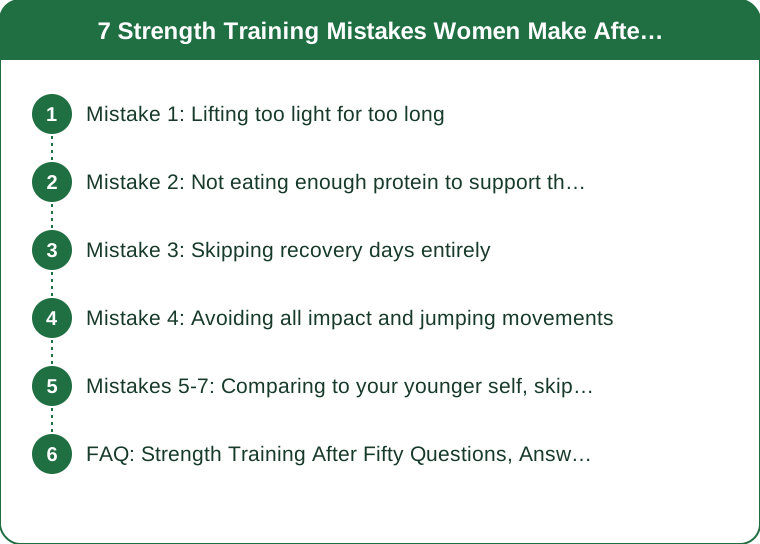
Mistake 1: Lifting too light for too long
Many women over fifty start with weights so light there’s no real strength stimulus, out of an understandable fear of injury. But muscle needs meaningful resistance to respond — bodies at this age can safely progress to challenging loads with proper form, and research consistently shows this population builds strength at rates comparable to younger lifters when given adequate stimulus.
Fix: Work with a trainer for 2-3 sessions to establish safe form at a real working weight, then progress the load every 1-2 weeks.
Mistake 2: Not eating enough protein to support the training
Muscle-building requires raw material, and protein needs actually increase after fifty, not decrease, due to a natural drop in muscle protein synthesis efficiency with age.
Fix: Target roughly 25-30g of protein per meal, 3-4 times a day — a level many women in this age group fall well short of without a specific plan.
Mistake 3: Skipping recovery days entirely
Motivated new lifters sometimes train daily out of enthusiasm, but recovery is where the actual strength adaptation happens — muscle repairs and rebuilds in the 24-48 hours after a session, not during it.
Fix: Schedule at least one full rest day between sessions targeting the same muscle groups.

Mistake 4: Avoiding all impact and jumping movements
Understandable caution around joints sometimes tips into avoiding every form of impact, but bone density specifically responds to impact loading in a way pure strength training alone doesn’t fully replicate.
Fix: Add low-impact options like step-ups or light hopping drills 1-2 times a week if cleared by a doctor, rather than cutting impact out completely.
Mistakes 5-7: Comparing to your younger self, skipping a warm-up, and quitting after one plateau
Mistake 5 is measuring progress against a 25-year-old version of yourself instead of your own baseline — a demotivating comparison that has nothing to do with your actual results.
Mistake 6 is walking straight into heavy sets cold; joints and connective tissue need a genuine 5-10 minute warm-up at this stage more than they did at 25.
Mistake 7 is quitting after a normal plateau, which happens to lifters of every age — a plateau usually means it’s time to change rep ranges or exercises, not stop training.
FAQ: Strength Training After Fifty Questions, Answered
How many times a week should women over fifty strength train?
Most guidance lands on 2-3 full-body sessions weekly, which is enough stimulus for strength and bone benefits without excessive recovery demand.
Is it too late to start strength training at fifty-five or sixty?
No — studies on strength training started well into the sixties and seventies consistently show meaningful strength and muscle gains; the body responds to resistance training at any age it’s introduced.
Should joint pain stop a workout entirely?
Sharp or worsening pain, yes, stop and reassess. Mild general soreness from a new exercise is normal — the distinction matters, and a physical therapist can help sort out which is which if it’s unclear.
TL;DR:
- Lift genuinely challenging loads, not overly cautious light weights — bodies over fifty adapt well to real resistance
- Protein needs go up with age, not down; target 25-30g per meal
- Recovery days aren’t optional — that’s when muscle actually rebuilds
- Keep some impact work for bone density, and don’t quit at the first plateau
Every one of these mistakes is common and every one is fixable — none of them mean you’re doing this wrong at a fundamental level. This is general information, not medical advice.
Keep Reading
This article is for general informational purposes only and is not medical advice. Always consult a qualified health professional for guidance specific to you.