The Strength Training Approach That Actually Protects Bone Density After 50
Strength training gets recommended broadly for bone health after 50, but not every type of resistance work delivers the same bone-density benefit. The mechanism bone actually responds to is more specific than general strength gain, and knowing that difference changes which exercises are worth prioritizing in a limited workout window.

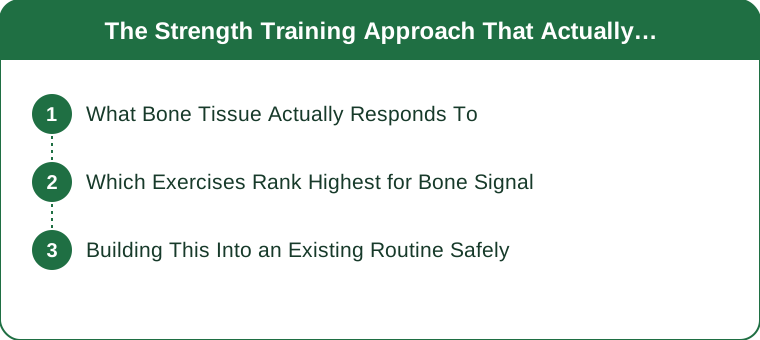
What Bone Tissue Actually Responds To
The mechanism: the the-mechanical-loading-threshold (the bone remodeling responding specifically to loads that exceed everyday movement intensity, per general bone-physiology research — meaning light resistance bands alone typically fall under that threshold), the the-impact-and-axial-loading (the exercises loading the spine and hips vertically — squats, deadlifts, weighted carries — producing stronger density signals than machine-isolated movements), the the-progressive-overload-necessity (the bone adaptation requiring progressively increasing load over time, not a static weight repeated indefinitely).

Which Exercises Rank Highest for Bone Signal
The priority list: the the-compound-lower-body-lifts (the squats and deadlifts loading the hip and spine simultaneously, the two most fracture-relevant sites after 50), the the-loaded-carries (the farmer’s carries and suitcase carries adding an axial-loading stimulus that’s easy to progress safely), the the-impact-where-appropriate (the low-level impact work like stair climbing or light jumping, when joint health allows, adding a loading signal that pure resistance work doesn’t replicate).
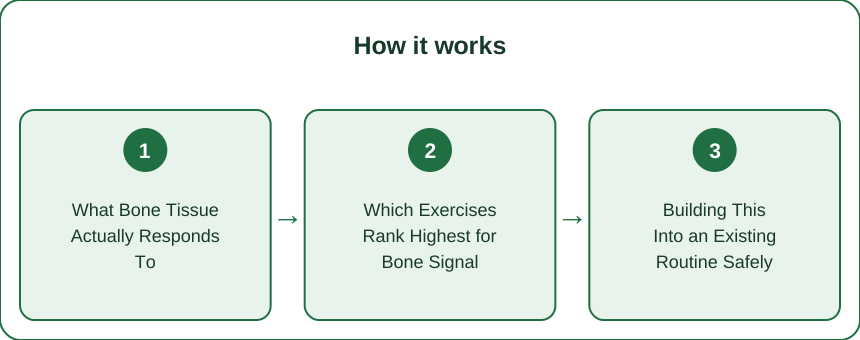
Building This Into an Existing Routine Safely
The practical entry point: the the-start-with-bodyweight-then-load (the establishing movement pattern safety with bodyweight squats and carries before adding external weight), the the-two-sessions-weekly-minimum (the bone-density research generally pointing to at least two weekly loaded sessions as the threshold for measurable benefit), and the frame (prioritize compound, progressively loaded, axial movements over isolated light-resistance work for bone-specific benefit).
Not all strength training earns equal credit for bone density after 50 — bone tissue responds specifically to mechanical loads that exceed everyday movement intensity, which is why light resistance bands alone often fall short of the threshold that triggers remodeling. Compound, axial-loading movements like squats, deadlifts, and loaded carries produce a stronger bone-density signal than machine-isolated exercises, particularly because they load the hip and spine, the two sites most relevant to fracture risk. Low-level impact work, where joints allow it, adds a loading stimulus that resistance training alone doesn’t replicate. None of this requires starting heavy — bodyweight squats and carries build the movement pattern safely before external load gets added, and two loaded sessions a week is generally the threshold research points to for measurable benefit. The goal isn’t more strength training in general; it’s the specific kind bone tissue actually listens to. The Strength Training Approach That Actually Protects Bone Density After 50.
Keep Reading
This article is for general informational purposes only and is not medical advice. Always consult a qualified health professional for guidance specific to you.