Balance and Power After Fifty: The Two Skills That Age Fastest
Strength declines politely with age — power and balance leave early and take the car keys. The fast-twitch fibers and the stability reflexes age fastest, matter most for daily life, and train back at every age. The two-skills curriculum for the decade that decides the next three.

The Fast-Fading Pair
The aging hierarchy: power falls first (the explosive strength — force times SPEED — declines faster than raw strength from midlife; the get-up-quickly, catch-the-stumble, cross-before-the-light capacities are power, not strength), balance follows (the reflexes-and-inputs system dulling quietly — the balance-training chapters’ whole thesis, urgent now), the daily-life translation (the fall that wasn’t caught, the curb that got hesitant — the aging people notice is mostly power-and-balance aging), and the good news (both train back robustly in the research — the fast-twitch fibers respond to speed work at every tested age; the reversal just needs the right stimulus, which strength-only training doesn’t provide).
The Power Curriculum
Training speed safely: the intent principle (power training after fifty is mostly MOVING FAST with light loads — the chair stand done explosively, the brisk step-up, the light-dumbbell press driven quickly; the load is modest, the intent is maximal), the graduated impact tier (the heel-drops-to-low-hops ladder from the bone chapter — impact serving bones and power together; the plyo-lab’s gentlest rungs are the fifties’ power wing), the medicine-ball option (the throw-and-slam family — power without landing; the most joyful equipment in the building), the stair-burst application (the brisk stair climb IS power training — the stair-snack chapter promoted to prescription), and the dose (power work leads sessions fresh — two short blocks weekly, quality over quantity, full recovery between efforts).
The Balance Integration
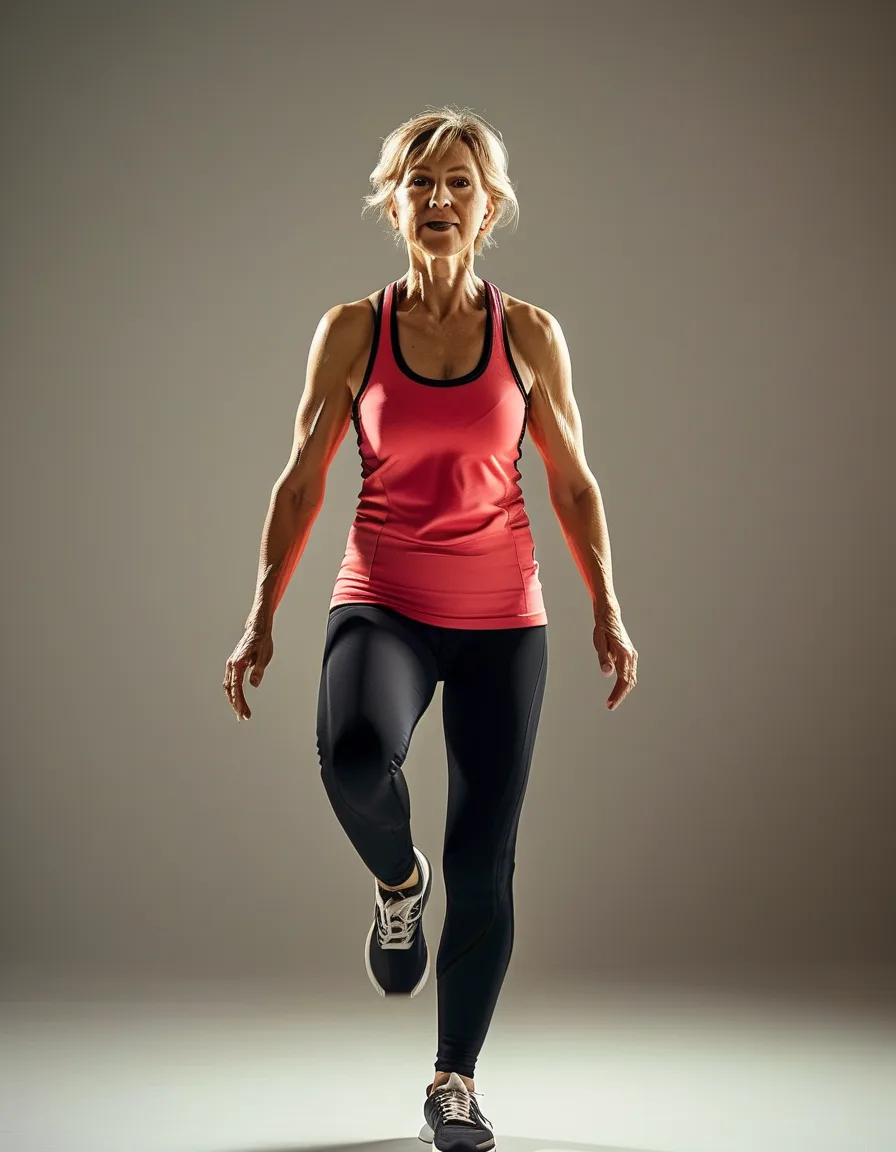
The stability half: the daily micro-dose (the coffee-brew single-leg stands, the heel-to-toe hallway — the balance-lab basics as non-negotiable dailies now), the challenge progression (eyes-closed holds, the head-turn vestibular work, the cushion-surface tier — the systems trained separately and stacked), the strength-balance hybrids (single-leg deadlifts and step-downs — the unilateral chapter earning its fifties billing; strength THROUGH balance is the efficient format), the tai-chi-and-dance wildcard (the research’s favorite balance interventions are weight-shifting practices — the class formats that train it socially), and the retest ritual (the timed single-leg stand monthly — the number that motivates and warns).
The Weekly Architecture
Fitting it all: the integrated week (two strength sessions OPENING with power blocks and CLOSING with balance work — the skills embedded, not appended; the minimal-fitness template upgraded for the decade), the walking upgrade (the interval-walking briskness and the varied-terrain choices — power and balance hiding in the daily walk), the recovery respect (fast-twitch work bills like heavy work — the 48-hour spacing and the sleep-and-protein support from the fifties-strength chapter), and the stakes framing (power and balance are the independence skills — the decade’s training buys the unassisted eighties; the fall not taken and the stumble caught are the quiet trophies). Strength keeps you capable; power and balance keep you FREE — train all three.
Move fast with light loads, hop gently for bones, balance daily at the coffee maker, retest monthly. Power and balance age fastest and train back — the fifties curriculum for staying free.
Keep Reading
This article is for general informational purposes only and is not medical advice. Always consult a qualified health professional for guidance specific to you.